If you grew up in the Midwest, you know the Wisconsin Dells drill: You ride the Ducks, you eat fudge, and you spend three days pruning your fingers in a waterpark.
But sometime in the early 2000s, something weird appeared on Broadway. It wasn’t a T-shirt shop. It wasn’t a mini-golf course. It was a building that promised... a quest?
For nearly two decades, Wizard Quest has been the hidden gem of the Dells—a place where families embark on a mystical quest inside a fantasy realm.
But how did a massive labyrinth end up in the middle of a waterpark town?
Grab a potion (or a coffee), because the history of Wizard Quest is actually a story about a family of artists who got bored of standing still.
The Prequel: The Wax Era (1990s)
Before there were dragons, there was Elvis.
In the 1990s, the building at 105 Broadway (the "Original" location) was known as the Wax World of the Stars. It was owned by Kevin and Corena Ricks, a husband-and-wife duo with a background in sculpting and art.
It was classic old-school tourism. You walked in, you looked at a wax figure of Julia Roberts, you said, “Huh, looks kinda like her,” and you walked out.
But as the year 2000 approached, the Ricks family saw the writing on the wall. The internet was booming, video games were taking over, and kids didn't want to just look at stuff anymore. They wanted to do stuff. The era of the passive museum was ending.
So, they did something radical: they sold the wax figures (literally shipping celebrities to eBay buyers all over the world) and gutted the building.
Level 1: The Experiment (2004 - 2020)
In 2004, Wizard Quest opened its doors.
If you visited during these early years, you remember the chaos. There were no tablets. There were no apps. You were handed a pencil and a piece of paper.
The concept was revolutionary for its time: A computer game played in real life ("IRL").
- The Mission: You had to solve riddles to "free" the wizards (Solstice, Opona, etc.)
- The Vibe: It was dark, misty, and confusing.
- The Hook: Hidden doors.
This was the golden era of the "Old Location." It became legendary for its secret passages. You might lean on a bookshelf and fall into a hidden room. You might crawl through a fireplace to get to the next level.
It was also famous for being... structurally confusing. Because it was retrofitted into an old building (and right next to Ripley’s Believe It or Not!), the layout was a chaotic maze of ramps and basements. Staff members famously joked about the basement being haunted, and getting lost was just part of the charm.
Level 2: The Tech Upgrade
As technology got better, so did the Quest. The Ricks family realized that paper and pencils were a nightmare to manage (and easy to cheat).
They introduced the "Skrinkle" (a little goblin character) and, eventually, tablets. Suddenly, the game wasn't just about finding clues; it was about managing your "Spell Power" (health).
If you answered a riddle wrong? Zap. You lost health. Run out of health? You had to do the "walk of shame" to a mana station to recharge. It added stakes to the game. It proved that this wasn't just a playground; it was a strategy game disguised as a gym class.
Level 3: The Great Migration (2020-2022)
By 2020, Wizard Quest had a "good problem": It was too popular.
The 13,000-square-foot building was packed. On rainy days (when the waterparks were cold), the wait times were insane. The Ricks family knew they needed to expand, but they were landlocked downtown.
The Solution? A massive game of musical chairs.
The Ricks family purchased the old "Wharf" building (also known as the Riverview Ballroom) at 400 Broadway. It was a massive, 30,000-square-foot space—more than double the size of the original.
In a twist of fate, Ripley’s Believe It or Not! moved out of its spot and took over the old Wizard Quest building. (So if you go to the old Wizard Quest location now, you'll see shrunken heads instead of dragons).
Level 4: The Quadrasphere (Today)
The new location, which fully opened around 2022, is a different beast entirely. It’s not just a maze anymore; it’s a "Fantasy Museum."
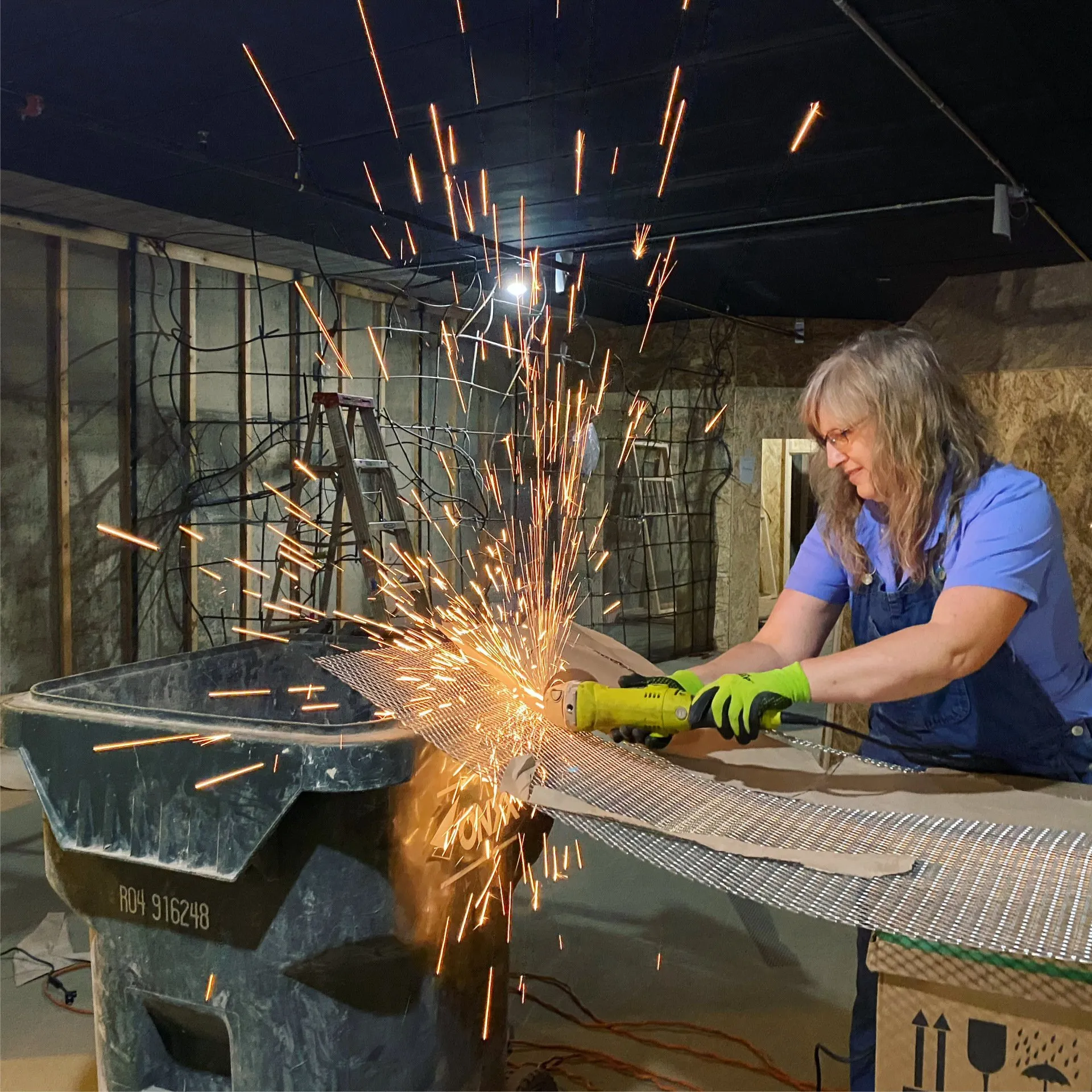
The Ricks family (now including their adult children, Braden and Cassie, who handle art, design, and makeup) built the entire thing in-house. They didn't hire a corporate theme park design firm. They built the dragons, painted the walls, and coded the game themselves.
The new space is divided into the Quadrasphere—four elemental realms:
- Fire Realm: Industrial pipes, machinery, and dragons. Famous for the "Lava" ball pit you have to swim through.
- Water Realm: Mirror mazes, coral reefs, and creepy deep-sea vibes.
- Earth Realm: A magical forest where you can literally buy snacks inside the maze.
- Air Realm: The upper decks, connected by massive tube slides that spiral down to the ground floor.
Why It Matters
In a town dominated by corporate waterpark resorts, Wizard Quest is a rare beast: a family-owned, artist-driven success story.
It operates on a philosophy Kevin Ricks calls "Edutainment"—the idea that you can learn mythology, geography, and critical thinking while sliding down a tube slide. Their slogan, "Created for adults, with children in mind," perfectly sums up why you see so many 30-year-olds running around sweating and shouting about finding a "hidden rune."
So next time you're in the Dells, look past the water slides. There's a dragon downtown, and it's waiting for you.